Influencer Marketing Advantages and Disadvantages for Businesses
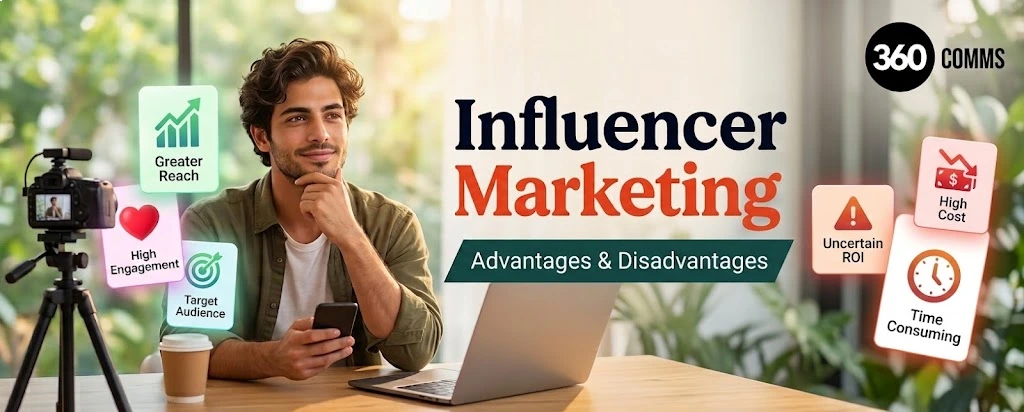
Influencer marketing can introduce your business to relevant audiences, make your offer easier to understand and support enquiries or sales. It also brings costs, less control over how your message is delivered, and uncertainty about results. The value comes from choosing the right partnership for a clear business objective.
For brands in Dubai and across the UAE, the decision should go beyond a creator's popularity. Who follows them, where those people live, and whether they could become your customers all matter.
This guide explains the main influencer marketing advantages and disadvantages, then shows how to decide whether a campaign is a sensible fit for your business. If you need the basics first, read our guide to what influencer marketing is and why it matters.
Advantages of Influencer Marketing
1. Reach People Beyond Your Existing Audience
A creator can introduce your business to people who have not encountered your website or social accounts. This is particularly useful when their content focuses on an interest closely connected to your offer.
For a local business, relevant reach matters more than total reach. A smaller audience of potential UAE customers may be more useful than a much larger following in markets you do not serve. Ask for audience information before deciding.
2. Build Confidence Through Credible Experiences
A creator who understands your product can explain it through their own experience. That can help viewers assess whether it fits their needs, especially when they already value the creator's judgement.
The benefit depends on honesty and a natural connection with the brand. Give creators accurate information, allow genuine opinions, and make paid partnerships clear. A rehearsed endorsement with no believable product experience can have the opposite effect.
3. Show Your Offer in a Useful Context
Creator content can answer questions that a standard promotional message leaves open. A demonstration might show the size of a product, how it is used, or what someone can expect from an experience.
Choose the format around the question your customer needs answered. A short video may explain a practical feature; a longer walkthrough may suit a purchase that needs more consideration. Views are more useful when the content also helps someone understand your offer.
4. Create Content You Can Reuse With Permission
A collaboration may produce useful material for your own website, social channels or advertising, as well as a post to the creator's audience.
That reuse needs to be agreed. Confirm where the content can appear, for how long, and whether edits or paid promotion are included. Do not assume that paying for a post gives your brand unlimited rights to the video, photography or other material within it.
5. Give Interested Viewers a Clear Next Step
Influencer content can direct people to a product page, booking route or enquiry form. A relevant message and a clear destination make the campaign easier to evaluate than a post with no defined action.
Tracked links and campaign codes can help identify responses. They provide evidence of activity, rather than a promise of sales. The offer, price and experience after the click still influence whether someone becomes a customer.
Disadvantages of Influencer Marketing
1. The Audience May Not Match Your Customers
Follower count does not show whether an audience is relevant, active or likely to buy. A Dubai-based creator may have a mostly international following, while impressive engagement can include reactions from people outside your market.
Artificial followers and interactions can also distort the picture. Review audience location, content relevance and the quality of comments alongside available analytics. Unusual patterns deserve investigation; they are not, by themselves, proof that a creator's audience is fake.
2. The Full Campaign Cost Can Be Easy to Underestimate
The creator's fee is only part of the budget. Production, products, delivery, content usage rights, paid distribution and coordination may also need to be included, depending on the campaign.
A modest posting fee does not automatically make a partnership good value. Compare proposals using the same deliverables and rights, then consider the cost against your objective. Avoid paying for broad exposure when the business needs a narrowly defined audience or a specific response.
3. Your Brand Shares Some Control and Reputation Risk
Creators bring their own tone, presentation and public identity to a partnership. That is part of their appeal, but it also means the result may differ from an advertisement produced entirely by your brand.
Review previous content and partnerships, then agree on essential facts and approval arrangements. Leave room for the creator's voice while making boundaries clear. A misleading statement or an unsuitable association can create a problem even when the post attracts attention.
4. Engagement Does Not Establish Return on Investment
Likes and views can show that content attracted attention, but they do not establish profitable sales. Some viewers buy later, visit through another channel or never take action, making attribution incomplete.
Match reporting to the campaign goal. Review relevant reach for awareness, meaningful interactions for engagement, and tracked enquiries or purchases for response. Do not claim that every sale during the campaign was caused by the creator, or judge a visibility campaign only by immediate purchases.
5. Reach and Delivery Are Not Fully Predictable
A creator's previous results do not guarantee the same exposure for your next post. Distribution, timing and audience interest can change, and coordinating briefs, approvals and reporting requires time from your team.
Set practical deadlines and responsibilities before starting. Plan how to handle questions and enquiries after publication, and avoid depending on one post for an essential business outcome. A campaign is easier to manage when there is a review point and a defined next step after the results arrive.
How to Decide Whether the Benefits Outweigh the Risks
Before committing to a partnership, answer these questions:
- What should change? Choose a main objective, such as introducing a product or generating qualified enquiries.
- Who needs to see it? Define the audience by location, interests and language, rather than follower count.
- Why this creator? Identify a credible connection between their usual content and your offer.
- What does the budget include? Confirm deliverables, approvals, usage rights and any additional campaign costs.
- How will you assess it? Agree on the evidence to collect and when to review performance.
If those answers are unclear, settle them before booking content. Our marketing strategy and campaign planning services cover the wider planning work that can give an influencer campaign a defined role.
A Practical Example for a UAE Business
Imagine a UAE homeware business considering a creator partnership to introduce a new storage product. This is a hypothetical example, not a client case study.
A relevant home-organisation creator could show how the product works and link to its page. The potential advantage is a useful demonstration reaching people interested in that problem. The risks include followers outside the delivery area, unclear dimensions in the video, or a fee that is difficult to justify against the response.
The business could start with a limited scope, confirm audience location and product facts, agree on reuse permissions, and track product-page visits and orders. Reviewing those responses alongside total campaign cost gives it a better basis for deciding whether to continue.
Discuss Your Influencer Campaign With 360 Comms
360 Comms connects brands with relevant influencers, content creators, key opinion leaders and key opinion consumers. Our work includes influencer campaigns, creator partnerships and social media collaborations, with paid and organic campaigns covering influencer selection, content creation, execution and performance optimization.
Explore our influencer marketing services in Dubai and the UAE to understand the service offering. When you are ready to discuss a campaign, contact 360 Comms with your target audience, objective, timing and intended scope.
Frequently Asked Questions
What Is the Main Advantage of Influencer Marketing?
It can introduce your offer to a relevant audience through a creator they already pay attention to. The benefit depends on the fit between the audience, creator and product.
What Is the Biggest Disadvantage of Influencer Marketing?
Paying for attention that does not support your objective is a major risk. Audience mismatch, unclear messages and weak measurement can leave a business with engagement but little useful evidence of value.
Are Micro-Influencers Always a Better Choice?
No. A smaller following is not enough to establish suitability or better results. Compare audience relevance, content quality, scope and total cost instead of selecting by creator category alone.
Is Influencer Marketing Worth It for Small Businesses?
It can be worth testing when a creator reaches the right customers and the scope fits the budget. Start with a clear objective and review the evidence before expanding the campaign.
Is Influencer Marketing Better Than Paid Advertising?
Neither is always better. Creator partnerships can add a personal explanation and access to an existing audience; paid advertising offers different controls over targeting and distribution. Choose according to your objective, budget and available evidence.
How Can You Reduce Influencer Marketing Risks?
Check audience fit, agree on accurate messaging and deliverables, confirm content rights, and plan measurement before publication. These steps reduce avoidable problems, but they do not guarantee a successful campaign.